
Get It Right
When it comes to spa design, you are spoilt for choice with a range of different styles, shapes, colours and sizes available to suit your needs. According to Darren Woo, there are three noteworthy spa styles: the traditional spa, the swim spa and the plunge pool. “With urban-block sizes decreasing, a spa, swim spa or plunge pool are great options [for almost any home],” he says. “[The] purchase and installation of these products is much quicker and neater than the traditional in-ground pool, with less disruption to your backyard.” Read on to discover the key differences and benefits of each style of spa, and determine which will best suit your needs.
Wish Upon A Spa
These days, the terms ‘hot tub’ and ‘spa’ are used interchangeably. “Suitable for smaller spaces, [they’re] designed for comfortable, seated relaxation, and hydrotherapy, as well as having fun with family and friends,” Woo says. Available in either portable, custom-built or inground styles, spas are generally positioned next to a swimming pool, or built as a stand-alone feature. In the past, spas were often made from cheap materials such as inflatable latex or vinyl. Nowadays, they’re manufactured using more durable materials such as fibreglass, acrylic or polyethylene. A standard-sized spa is perfect for energy conscious couples who have limited space and time. In order to ensure your spa runs as efficiently as possible, Woo recommends opting for a three-seated spa with 33 water jets. He also suggests choosing a fibreglass-reinforced American-acrylic shell, as well as insulation for the shell, cabinet, and fibreglass base to reduce heat loss. To further minimise your utility costs, Woo suggests selecting a spa with a UV or ozone sanitisation system and a 2kW Balboa heater. Choose eco-friendly LED lights for the waterline and any special features, such as waterfalls or cup holders. Woo also recommends including a 10-amp power supply for ‘plug and play’ capabilities, as well as a lockable hardcover to protect the water from debris.
A STROKE OF GENIUS
A small pool with large water jets, the swim spa is primarily designed to allow you to swim continuously against a flow of water. This style of spa is very versatile as it allows you to participate in low-impact exercise, relax in the warm water to soothe aches and pains, or simply play around. “This type of spa can also include a seated area with massage jets, [which will] help you relax after a vigorous workout,” Woo says. Split-model swim spas are designed with a relaxation section on one end, and a swimming area on the other. Specialised equipment can also be incorporated into the design for other water-based exercise activities such as rowing or aqua cycling. A swim spa is perfect for large families who have a big home, young children, and a love of entertaining guests. For a family-friendly spa that will provide hours of amusement, Woo recommends selecting a model with powerful jets, seven fully-reclining hydrotherapy seats and a separate swimming zone.
To ensure the entire swim spa stays warm, Woo suggests using two 3kW Balboa heaters, which will heat both areas separately, or a heat pump. Two Balboa control systems should be included for full control over all equipment and features. A 3hp pump is recommended for the seated area, and four 2hp pumps should be included in the swimming zone for extra water-jet power.
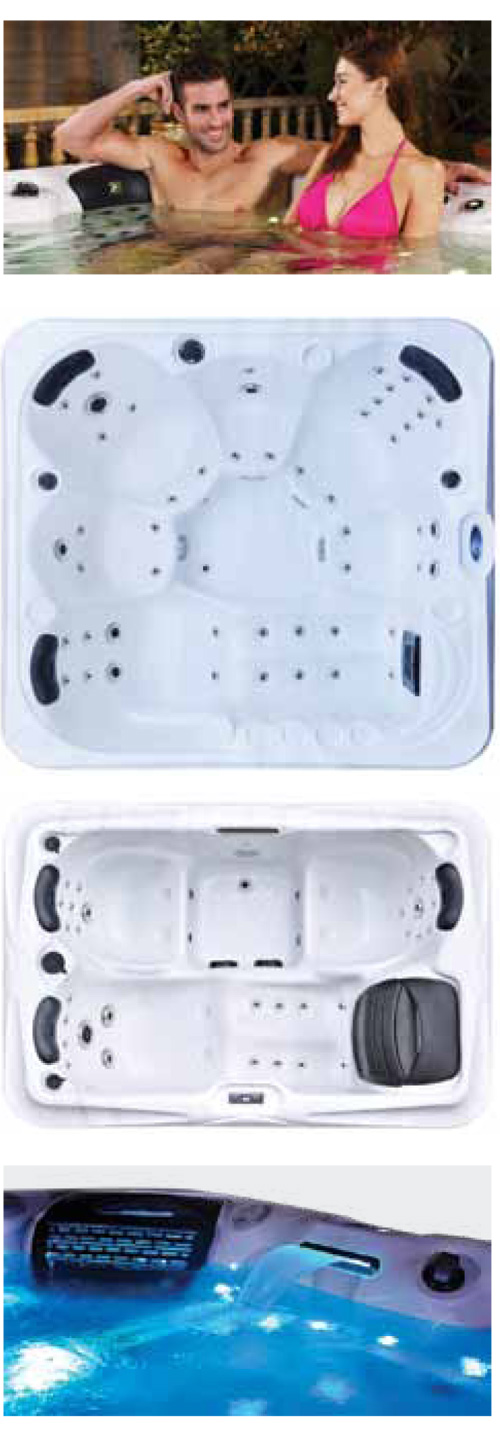
Woo also recommends seeking a maintenancefree cabinet and steps, which will reduce the need for excessive cleaning so you can spend more time enjoying your spa.
TAKE THE PLUNGE
A compact swimming pool that’s designed for small areas, the plunge pool is excellent for cooling off, exercising or just having fun. Homeowners often prefer plunge pools because of their smaller size, low maintenance requirements, and reduced water and energy usage, which combine to significantly lower utility costs. They can easily be enhanced with
extra features such as fountains and waterfalls. Further, their shallow depth makes them ideal for families with small children.
SPA-SAVVY TIPS
Whatever spa style you choose, it’s important to consider each and every aspect of its design – such as its size, shape and interior finish – before embarking on your project. Woo has provided some additional handy tips to ensure your spainstallation experience is an enjoyable one from start to finish.
Accessibility
When planning the construction of your spa area, make sure you check the accessibility of your home. In some cases, access from neighbouring properties or lifting devices may be required. “[Fortunately], most products can be delivered quite easily with the use of a crane,” Woo says. Do Your Homework It’s important that you sit down to carefully consider all design aspects of your spa from the very beginning to ensure it’s specifically built to suit your needs. “Consider what you are going to use the spa for and how many people will be using it at the same time,” advises Woo. “[Make sure you research] the right products for your requirements, space and budget.”
Quality Over Quantity
All too often, spa owners dedicate a large portion of their budget to improving the aesthetics of their spa, leaving very little to spend on the products that will be required for it to run as efficiently as possible. It’s vital that you choose high-quality spa parts and products from the start, so maintenance costs won’t land you in hot water later on. “Ensure the products you are purchasing are well-made, with [quality-tested] components and operating systems,” says Woo.
Ask Questions
Make sure you ask all of those ‘silly’ little questions! Asking a simple question could save you hassles in the long run, especially with regards to claiming warranty or organising a replacement part, which can potentially be timeconsuming to arrange. “Servicing and running costs also need to be [fully] explained in the beginning so [you’re] aware of future and ongoing costs,” says Woo.
Check Again
Ensure you have all of the appropriate permits and approvals before commencing your spa project. Crossing all of your t’s and dotting your i’s will reduce delays in construction. “Check with your local governmental regulations [whether] isolation fences are required,” advises Woo. With a little bit of forethought, a solid plan and some professional advice, you’re sure to end up with the perfect spa for year-round enjoyment with family and friends. If you take the above tips on board, finding the right model will be a relaxing and stress-free experience you’ll want to jump right into!